

MEDICAL CANNABIS PATIENT GUIDE · PART 1 OF 4
Getting Started with Medical Cannabis in Utah
Congratulations on taking this step. Medical cannabis is a legitimate, state-regulated medicine in Utah — and at Progressive Primary Care, we're here to guide you through every part of the process. This guide covers what medical cannabis is, how it works in your body, and your complete 9-step journey to getting your card.
What is medical cannabis?
The plant
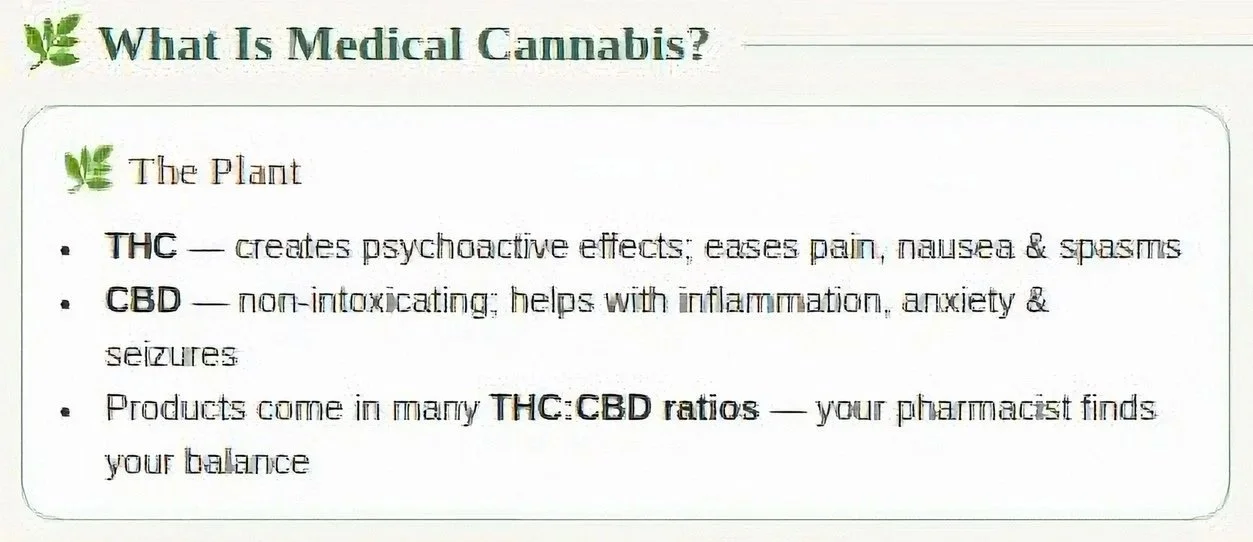
Medical cannabis contains two primary active compounds. THC creates psychoactive effects and helps ease pain, nausea, and muscle spasms. CBD is non-intoxicating and helps with inflammation, anxiety, and seizures. Products come in many THC:CBD ratios — your pharmacist will help you find the right balance for your condition.
How it works in your body
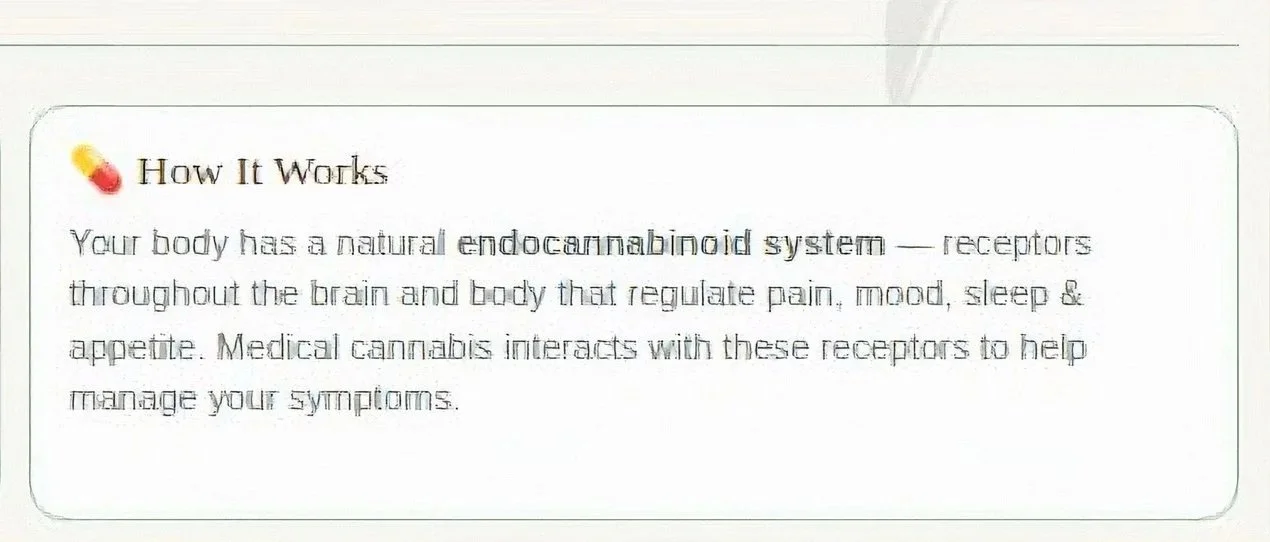
Your body has a natural endocannabinoid system — a network of receptors throughout your brain and body that regulate pain, mood, sleep, and appetite. Medical cannabis interacts with these receptors to help manage your symptoms. This is why it works for such a wide range of conditions.

Your 9-step journey to your card
We handle most of this for you. Here's exactly what to expect from your first call to the day your card arrives.
Step 1 — Contact Progressive Primary Care
Call, text, or email us to schedule your evaluation. New card evaluations are conducted in person. Annual renewals can be done in person or virtually. We'll send you intake paperwork and step-by-step EVS account instructions before your visit so you arrive prepared.
📞 Call or text: (801) 571-0796
✉️ Email: help@progressiveprimary.care
Step 2 — Create your Utah EVS account
We will include instructions and links with your intake paperwork.
Electronic Verification System (EVS) is the state's secure patient portal. Go to evs.utah.gov and sign up using your UtahID. We'll send you a direct link and a walk-through guide — it's easier than it sounds and takes about 5 minutes.
Step 3 — Submit your patient application in the EVS
Fill out your application in the state portal. You can add a caregiver or delivery address at this step if needed. We provide step-by-step directions during intake and are happy to walk you through it at your appointment.
Step 4 — Your in-person evaluation at Progressive Primary Care
This is the heart of the process. Dr. Law conducts a comprehensive medical assessment — required by Utah law for all new cards. He reviews your medical history, discusses your qualifying condition, and evaluates whether medical cannabis is appropriate for your specific situation. If approved, Dr. Law submits your certification directly to the EVS in real time.
This is a real clinical visit — not a rubber stamp. You'll leave with a clear understanding of how medical cannabis fits your overall care.
Step 5 — Pay the $8 state card fee
After your certification is submitted, you'll receive an email from Utah DHHS with a link to pay the required $8 state application fee online. This is a state fee — not a practice fee — and cannot be waived. The email will come immediately and can be paid during your appointment.
Step 6 — Download your card
Log back into your EVS account to download your card. In most cases you will be able to download your temporary card immediately. Save it to your phone or print a copy — you'll need it at every pharmacy visit along with a valid photo ID.
Step 7 — Meet with a cannabis pharmacist
Before your first purchase, Utah law requires a free consultation with a licensed cannabis pharmacist. This isn't just a formality — cannabis pharmacists are extensively trained specialists who will recommend products and dosing tailored specifically to you. Take full advantage of this consultation.
Step 8 — Purchase at a licensed Utah pharmacy
Bring your card and a valid photo ID. Many Utah pharmacies offer home delivery. Most dispensaries are cash-only due to federal banking restrictions — plan ahead and bring cash.
Step 9 — Follow up with us and renew annually
Your card is valid for up to one year. We recommend scheduling your renewal appointment about three weeks before your card expires to avoid any gap. Renewal appointments can be done virtually. As a primary care practice, we're your long-term partner — we want to know how your treatment is going and adjust as needed.
Utah qualifying conditions
Utah law requires a qualifying medical condition for a medical cannabis card. The full list of approved conditions includes:

-
Persistent pain — defined in Utah as pain lasting more than two weeks that has not responded adequately to conventional treatment — is the most common qualifying condition for medical cannabis in Utah and nationally. Research suggests that cannabinoids may interact with the body's endocannabinoid system to modulate pain signaling, reduce inflammation, and improve pain tolerance. Some patients with chronic musculoskeletal pain, nerve pain, and fibromyalgia report meaningful relief with cannabis-based therapies, particularly when conventional medications have been ineffective or caused significant side effects.
-
Post-traumatic stress disorder (PTSD) is one of the most researched areas of medical cannabis use. Studies suggest that cannabinoids may help regulate the fear response, reduce hyperarousal, and improve sleep quality in patients with PTSD — areas where conventional treatments often fall short. The endocannabinoid system plays a role in fear memory extinction, and early research indicates cannabis may support this process. Medical cannabis is not a cure for PTSD but may be a meaningful part of a comprehensive treatment plan under physician supervision.
-
Cancer patients may qualify when experiencing pain, nausea, cachexia, or other debilitating symptoms related to their disease or treatment. Research suggests cannabis may help manage chemotherapy-induced nausea, stimulate appetite, and provide pain relief. Dr. Law will evaluate your specific situation and symptoms at your appointment.
-
Epilepsy and debilitating seizure disorders are among the most well-established qualifying conditions for medical cannabis. CBD — a non-intoxicating cannabinoid — has demonstrated significant anticonvulsant properties in clinical trials, leading to FDA approval of a CBD-based medication (Epidiolex) for certain severe epilepsy syndromes. For patients whose seizures have not responded to conventional anti-epileptic medications, medical cannabis may offer a meaningful therapeutic option under careful physician supervision.
-
Multiple sclerosis (MS) frequently causes debilitating muscle spasticity, pain, and bladder dysfunction. Research suggests that cannabinoids may help reduce muscle spasm frequency and severity, improve sleep, and provide pain relief in MS patients. Several countries have approved cannabis-based medications specifically for MS-related spasticity, and clinical guidelines in some jurisdictions now include cannabis as an option for patients who have not responded adequately to conventional spasticity treatments.
-
HIV/AIDS and its treatments can cause chronic pain, nausea, nerve damage, and significant weight loss. Medical cannabis may help manage these symptoms, supporting quality of life and appetite in patients living with HIV/AIDS. Dr. Law can evaluate whether medical cannabis is appropriate as part of your overall care plan.
-
Crohn's disease causes chronic inflammation of the digestive tract, leading to severe abdominal pain, diarrhea, and significant quality of life impairment. Research suggests cannabinoids may help reduce gut inflammation, decrease pain, and improve appetite in Crohn's patients. Some patients report meaningful symptom relief when conventional treatments have been only partially effective.
-
Ulcerative colitis is a chronic inflammatory bowel disease causing abdominal pain, urgent diarrhea, and significant disruption to daily life. Research suggests cannabinoids may help reduce intestinal inflammation and improve symptom control in some patients. Medical cannabis may be considered as part of a comprehensive treatment approach when conventional therapies have been insufficient.
-
Persistent nausea that has not responded adequately to conventional antiemetic medications can be significantly debilitating and is a recognized qualifying condition in Utah. Cannabinoids have strong scientific support as antiemetic agents — THC in particular has been shown to reduce nausea and vomiting through its interaction with the endocannabinoid system. Medical cannabis may offer relief for patients whose nausea has not responded to standard treatments.
-
Alzheimer's disease can cause significant behavioral symptoms including agitation, aggression, sleep disturbances, and anxiety that are difficult to manage with conventional medications. Research suggests cannabinoids may help reduce agitation and improve sleep quality in Alzheimer's patients. Medical cannabis may offer a gentler alternative or complement to conventional behavioral medications under physician supervision.
-
ALS is a progressive neurodegenerative disease causing muscle weakness, spasticity, pain, and difficulty swallowing and breathing. Research suggests cannabinoids may help manage several ALS symptoms including muscle spasms, pain, excessive saliva production, and sleep disturbances. Medical cannabis may offer meaningful quality of life improvements for ALS patients when supervised by a physician.
-
Autism spectrum disorder (ASD) can involve significant behavioral challenges, anxiety, self-injurious behavior, and sleep disturbances that are difficult to manage with conventional approaches. Emerging research suggests cannabinoids — particularly CBD — may help reduce certain behavioral symptoms and improve quality of life in some ASD patients. Medical cannabis for autism requires careful physician evaluation and supervision given the complexity of the condition.
-
Cachexia is a complex metabolic condition involving severe involuntary weight loss, muscle wasting, and fatigue — most commonly associated with cancer, HIV/AIDS, and other serious illnesses. Research strongly supports cannabis as an appetite stimulant and weight stabilizer in cachexia patients. THC in particular has well-documented appetite-stimulating properties that may help patients maintain weight during serious illness.
-
Patients receiving hospice care or facing a terminal illness with a prognosis of six months or less automatically qualify for medical cannabis in Utah. Cannabis may help manage pain, anxiety, nausea, and sleep disturbances at end of life, supporting comfort and dignity. Dr. Law approaches these evaluations with particular sensitivity and can coordinate with your existing care team.
-
Utah law also allows medical cannabis for rare conditions — defined as those affecting fewer than 200,000 Americans according to the NIH definition. If you have a rare diagnosis not specifically listed among Utah's qualifying conditions, you may still qualify. Dr. Law will review your medical records and history at your evaluation to determine eligibility.
Want to learn more about how medical cannabis may help your specific condition? See our complete qualifying conditions guide →
Not sure if your condition qualifies? Utah's Compassionate Use Board reviews individual petitions monthly for conditions not yet on the list. Dr. Law can help you navigate that process. The best way to find out if you qualify is to schedule an evaluation — he'll give you an honest answer at your appointment.

What to bring to your appointment
Coming prepared helps Dr. Law give you the most thorough evaluation possible:
Valid Utah state ID or driver's license — proof of Utah residency is required by law
Relevant medical records — labs, imaging, prior diagnoses, specialist notes
Current medication list — including supplements and over-the-counter medications
Prior treatment history — especially for chronic pain, documentation that conventional treatments were tried and weren't adequate
For PTSD patients — documentation from a VA provider, psychiatrist, licensed clinical social worker, or psychiatric APRN
A UtahID account — needed to access the EVS portal; we can help you create one at your visit if needed
Not sure if your records are sufficient? Call us before your appointment — we're happy to help you figure out what's most useful to bring.
Ready to get started?
Scheduling your evaluation is simple. Call or text us and we'll take it from there. Same-day appointments are often available.
📞 (801) 571-0796 — call or text
✉️ help@progressiveprimary.care
📍 9844 South 1300 East, Suite 125, Sandy, UT 84094
Continue reading: the complete patient guide
This is part 1 of Dr. Law's 4-part medical cannabis patient education series.
Part 2: Safety, Side Effects & Drug Interactions
Part 3: Products, Dosing & What to Expect
Part 4: Your Rights, Legal Protections & Resources
Part 5: Understanding Utah Qualifying Conditions